SCIENCE · EVIDENCE · PERSPECTIVE
Cartilage formation & cellular aging research
Cartalax
RESEARCH GUIDE
THE PRODUCT
What it is
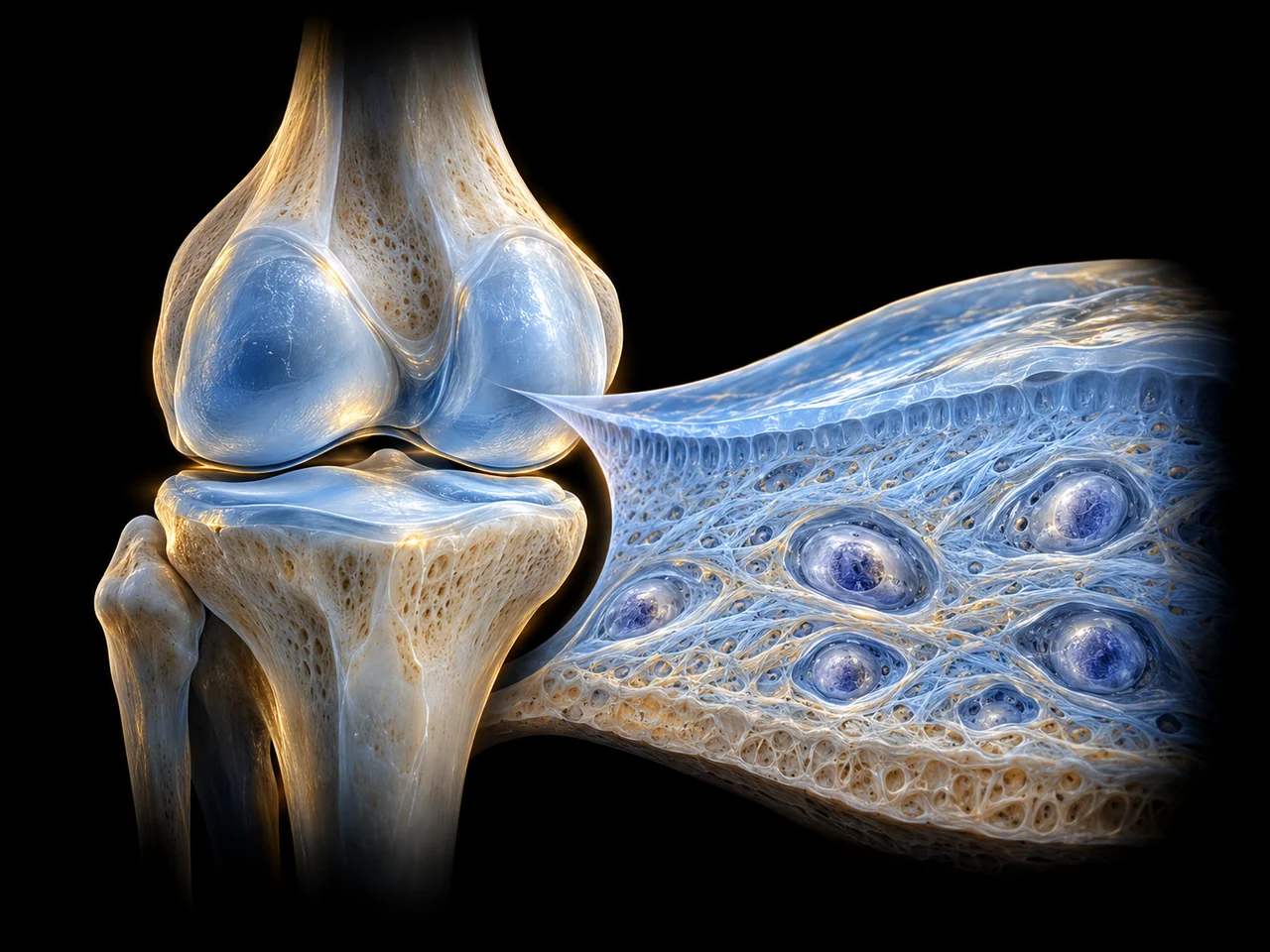
Cartalax is associated with the tripeptide Ala-Glu-Asp, abbreviated AED. Researchers investigate its effects on cartilage-forming cells and the cellular changes that occur as those cells age; the supplied lot's sequence must match the study material.
- Cartilage-forming cell differentiation
- Collagen II and aggrecan markers
- Aging-related cartilage-cell signaling
PRODUCT SPECIFICATIONS
Inside the vial
20mg · CAR20
Sold individually · 1 vial
Inquire about discounted pricing for a 10-vial kitNominal contents per vial. Listed contents are not a dose or instructions for use. Lot documentation controls.
RESEARCH AT A GLANCE
Potential benefits studied
The most relevant findings concern cartilage biology in laboratory cultures. They suggest areas worth studying, rather than proven relief from joint pain or regrowth of damaged cartilage.
Human stem-cell cultures
Cartilage-forming pathways
In aging human stem-cell cultures, AED increased markers associated with cartilage formation, including type II collagen and aggrecan. These building blocks explain interest in cartilage maintenance, but marker changes are not proof of repaired joints in people.
Chondrocyte cultures
Aging cartilage-cell responses
A separate chondrocyte study reported changes in proteins linked to cellular aging and inflammatory signaling. This supports exploring whether AED can influence the environment around cartilage cells; it does not establish an osteoarthritis treatment or clinical anti-aging benefit.
EVIDENCE REALITY
Evidence at a glance
Human cartilage-cell culture studiesTwo 2023 primary culture studies support cartilage-related research interest. They measured differentiation and aging-associated signals, rather than cartilage regrowth, movement or pain in a controlled patient trial.
THE TAKEAWAY
An experimental cartilage-biology peptide with cell-culture findings; clinical joint repair and symptom relief remain unproven.
Important distinctions
- Verify Ala-Glu-Asp sequence and lot identity before applying AED findings.
- Cartalax is not established to regrow cartilage or treat osteoarthritis.