SCIENCE · EVIDENCE · PERSPECTIVE
Modified IGF-1 research material
IGF-1 LR3
RESEARCH GUIDE
THE PRODUCT
What it is
IGF-1 LR3, also called Long R3 IGF-I, is a modified analogue of insulin-like growth factor 1. Researchers use it to study growth-factor responses in cells and animals, including muscle-cell development and the effects of IGF-binding proteins. It is distinct from native IGF-1 and finished prescription products.
- Muscle-cell development
- IGF-binding protein interactions
- Muscle preservation and unwanted growth
PRODUCT SPECIFICATIONS
Inside the vial
0.1mg · IG0.1
Sold individually · 1 vial
Inquire about discounted pricing for a 10-vial kitNominal contents per vial. Listed contents are not a dose or instructions for use. Lot documentation controls.
1mg · IG01
Sold individually · 1 vial
Inquire about discounted pricing for a 10-vial kitNominal contents per vial. Listed contents are not a dose or instructions for use. Lot documentation controls.
RESEARCH AT A GLANCE
Potential benefits studied
Potential effects under study include muscle-cell development and preservation of muscle in experimental disease models. These findings are preclinical and include an important tumor-growth concern.
Cultured muscle-cell research
Muscle-cell development
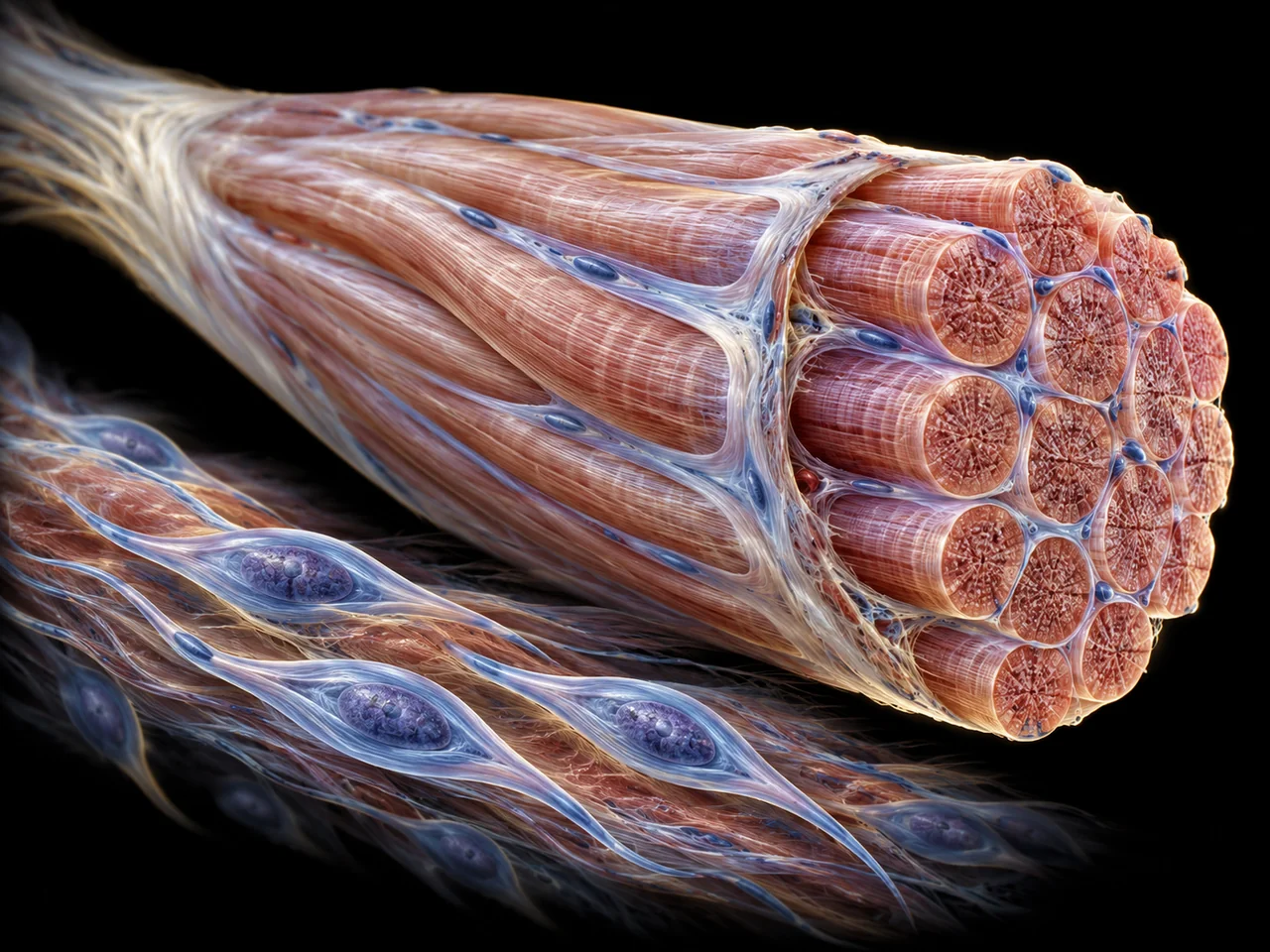
Experiments in cultured muscle cells found that Long R3 IGF-I promoted development into muscle fibers. This is a useful signal for studying muscle biology, but cell growth in a dish does not demonstrate improved human muscle mass, strength, or recovery.
Animal disease model — benefit and harm observed
Muscle-wasting models
In a cancer-associated muscle-wasting mouse model, LR3 IGF-I limited muscle loss but also accelerated tumor growth. The paired finding shows why a potential tissue-growth benefit cannot be interpreted separately from unwanted growth effects; it is not a human treatment recommendation.
EVIDENCE REALITY
Evidence at a glance
Cell and animal studiesThe primary sources examine Long R3 IGF-I itself in muscle-cell experiments and a mouse disease model. They do not validate the Apex lot or establish human benefit; accelerated tumor growth is a material limitation in the animal evidence.
THE TAKEAWAY
IGF-1 LR3 has directly relevant muscle-cell and animal research. Growth-promoting activity can affect both desired and unwanted tissue responses, and no established human performance or recovery benefit follows from these preclinical studies.
Important distinctions
- The cited mouse study observed accelerated tumor growth alongside reduced muscle wasting.
- Growth-factor activity is biologically potent; sequence, folding, chemical form, and lot activity require documentation.
- Native IGF-1 and prescription-product studies cannot be treated as evidence for this LR3 research vial.